
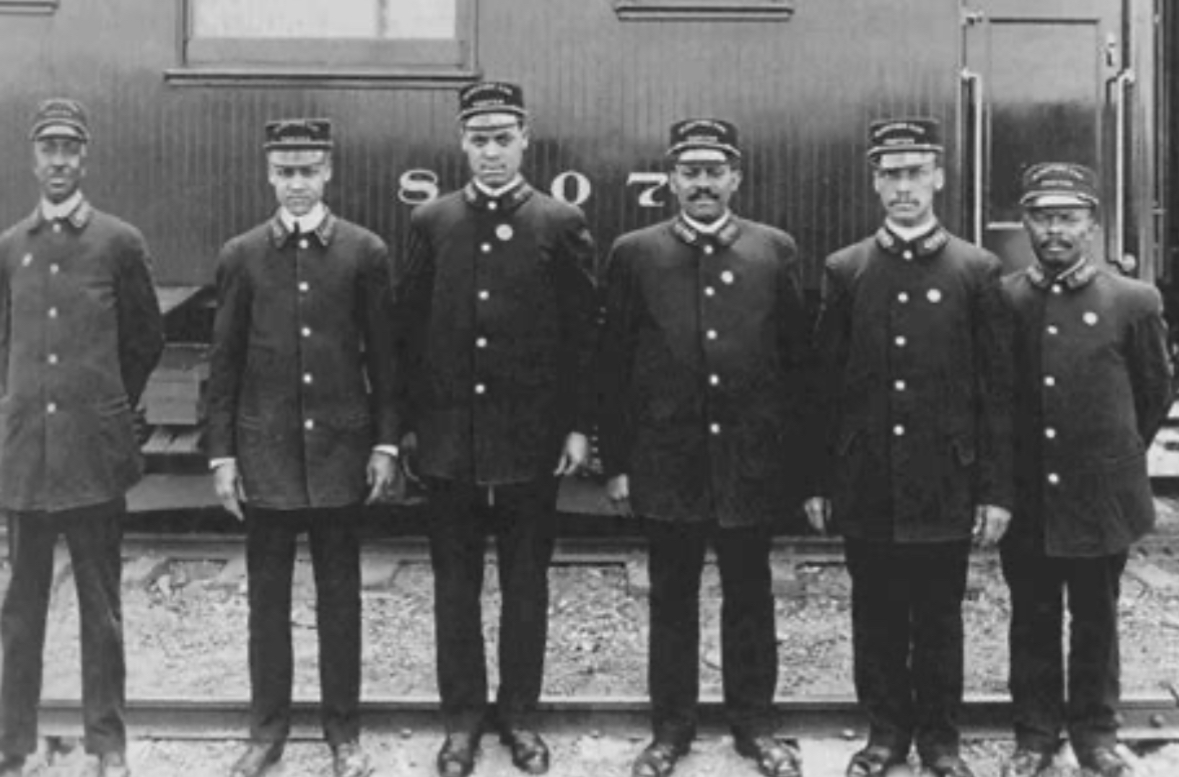
When we honor Labor Day, we often think of barbecues, parades, and a day off. But for Black workers in Delaware and across the nation, the holiday carries a deeper story, a struggle for dignity, fair wages, and recognition that shaped both labor rights and civil rights.
View this post on Instagram
One of the most powerful symbols of that fight was the Brotherhood of Sleeping Car Porters (BSCP), founded in 1925 by A. Philip Randolph. This union became the first African American–led labor union recognized by the American Federation of Labor (AFL), making history in the fight for equality on and off the job.
Dignity Behind the Uniform
Pullman porters, nearly all of whom were Black men, worked long hours on trains with little rest and relied heavily on tips. They were often denied the basic dignity of being called by their names—many were simply called “George,” after company founder George Pullman. Despite these conditions, the job was sought after: it offered stable wages, travel opportunities, and a path toward building a Black middle class.
Delaware’s Connection
Delawareans were not strangers to this struggle. Black workers in Wilmington’s shipyards, on farms, and in domestic labor already knew the sting of exclusion from early labor protections. The Pullman porters’ victories inspired workers in Delaware to imagine more, to fight for fair treatment and greater opportunity in their own industries.
Beyond Labor: Fueling Civil Rights
The BSCP wasn’t just about workplace reform—it was a seedbed for the civil rights movement. Leaders like Randolph and E.D. Nixon (who later recruited Dr. Martin Luther King Jr. to lead the Montgomery Bus Boycott) showed how labor organizing could fuel racial justice. Their success helped pave the way for landmark events like the March on Washington and legislation such as the Civil Rights Act of 1964.
Why It Matters Today
The story of the Brotherhood of Sleeping Car Porters reminds us that labor history and Black history are inseparable. In Delaware, as across the nation, the push for dignity, justice, and equality at work continues. On this Labor Day, let’s honor not only the day off, but the people who fought to make work worth doing.