
A historic shift is underway in Wilmington as the city launches its newly formed Community Police Accountability Board (WCPAB). For Black residents, who make up the majority of the city and have long carried the weight of strained police-community relations, this Board is more than just a new city program. It is a long-awaited seat at the table.
Why It Matters for Wilmington’s Black Community
For generations, Wilmington’s Black neighborhoods have lived at the center of policing debates. From over-policing to mistrust during times of crisis, Black families have often felt both overlooked and overexposed. The WCPAB, which replaces the old Citizens Complaint Review Board, is designed to change that dynamic by putting community voices directly into the process of shaping police policies, training, and accountability.
This transformation was made possible by Ordinance 24-063, passed in December 2024, and builds on legislation introduced in 2020 by Council Member Chris Johnson, who envisioned a stronger bridge between the community and law enforcement.
Representation and Voice
The Board’s seven appointed members reflect Wilmington’s diverse community and lived experiences:
- Albert Mills – Community member impacted by the criminal justice system
- Bishop Thomas Weeks – Faith-based community
- Jennifer Thompkins – Civil rights advocate
- Hanifa Shabazz – Community member and former City Council President
- Darryl L. Chambers – Education community
- Andrea Hale-Nichols – Mental health community
- Nicholas X. Brock – Community member
Additionally, Mayor John Carney, represented by Dwight Holden, and Police Chief Wilfredo Campos, or his designee, will serve as non-voting ex-officio members, ensuring communication with law enforcement while centering community voices.
Leaders Speak Out
- Council Member Chris Johnson (7th District): “The launch of this Board is a victory for transparency, but more importantly, it’s a victory for the people of Wilmington who deserve to be heard and respected.”
- Council President Ernest “Trippi” Congo, II: Pointed to the urgency of the work, noting the 2023 death of Tyre Nichols: “I cannot ask the people that I represent to trust a process and a system which closes its doors to outside review and is shrouded in such secrecy.”
- Council Member Yolanda McCoy (6th District): “Accountability and justice go hand in hand. Voices that were once silenced are now centered.”
- Council Member Shané Darby (2nd District): “For years, our community has been calling for change, for transparency, and for equity. This Board represents the power of people coming together to demand something better.”
Beyond Symbolism
The WCPAB is empowered to review complaints, recommend changes, and track accountability. Members will receive 20 hours of community training and guidance from the Delaware Police Accreditation Commission (DPAC) and the Police Officer Standards and Training Commission (POST). Its meetings are open to the public, giving residents—especially in Black neighborhoods—the chance to be heard and to hold institutions accountable in real time.
Meeting Schedule
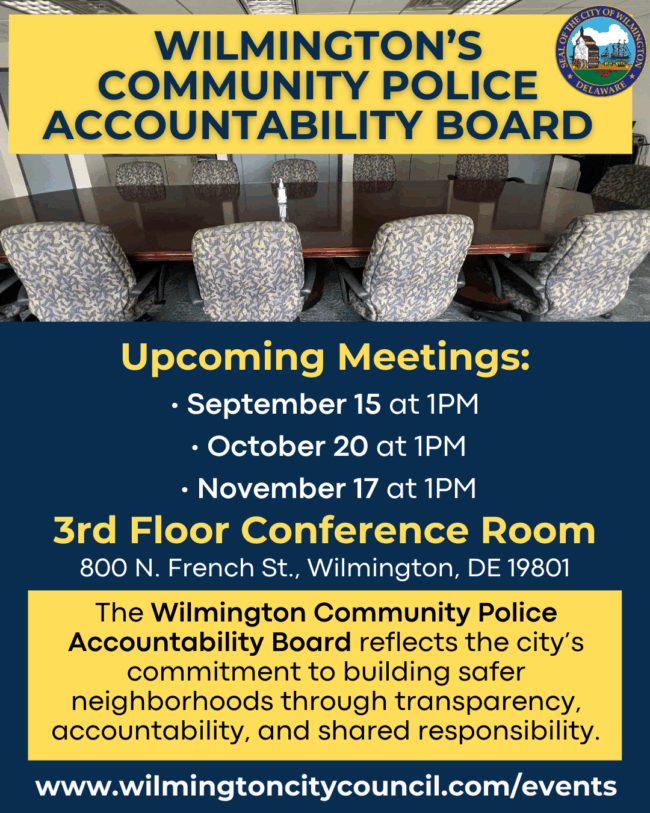
- September 15 at 1PM
- October 20 at 1PM
- November 17 at 1PM
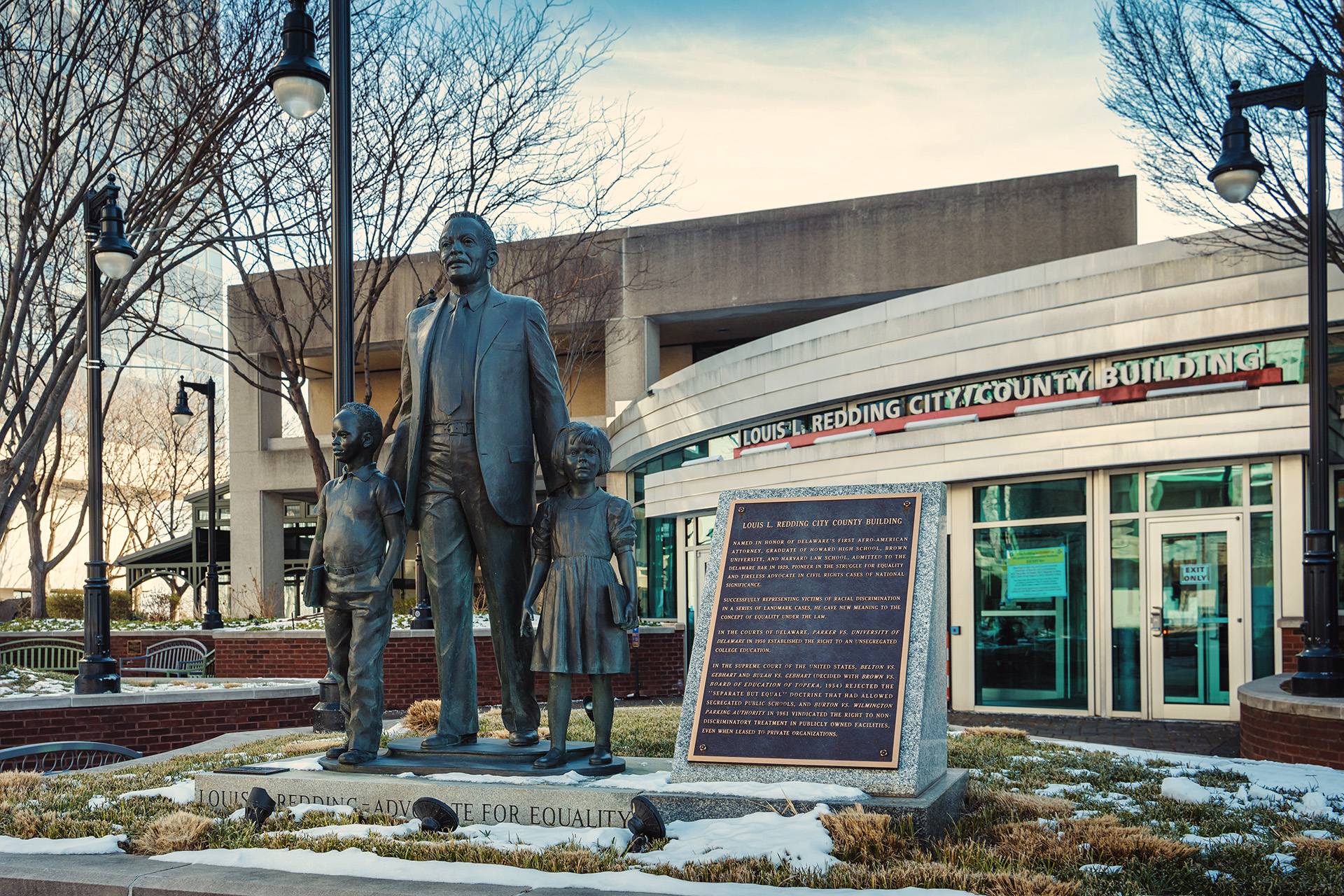
All sessions will take place in the 3rd Floor Conference Room at the Louis L. Redding City/County Building (800 N. French Street), named after Wilmington’s own civil rights attorney who fought relentlessly against racial injustice.
A Step Forward
For Wilmington’s Black community, this is not the end of the struggle for fairness in policing, but it is a beginning. The creation of the Community Police Accountability Board shows that when residents demand better, the city must respond. It is a promise that accountability and justice will walk hand in hand, and that Wilmington’s neighborhoods, Black neighborhoods most of all, will no longer be left out of the conversation.

. For the city’s black residents, long at the center of strained police relations, it represents more than policy; it’s a long-awaited seat at the table.)