
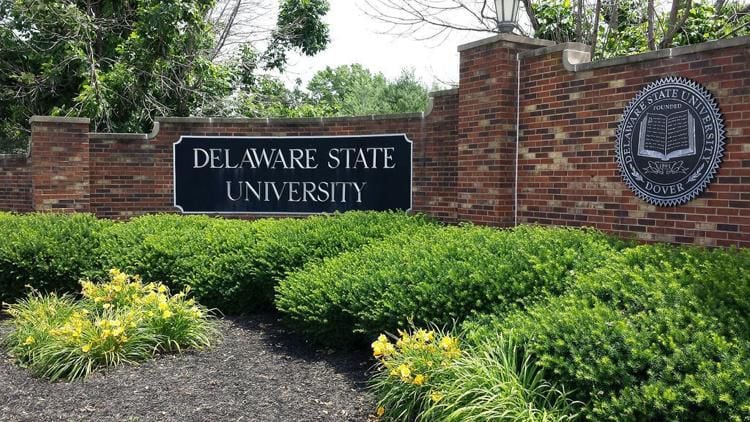
On Tuesday, September 30, 2025, Delaware witnessed multiple credible-sounding threats to university campuses that led to mass evacuations, class cancellations, and heightened security. WHYY+4WBOC TV+4CBS News+4
Delaware State University (DSU)
-
Around 11:00 a.m., DSU in Dover received a bomb threat, prompting the evacuation of academic buildings and the cancellation of classes for the rest of the day. AFRO American Newspapers+4NBC10 Philadelphia+4WBOC TV+4
-
All nonessential personnel were sent home, and in coordination with state and federal law enforcement, the campus was thoroughly searched. AFRO American Newspapers+4NBC10 Philadelphia+4WBOC TV+4
-
By late afternoon, DSU announced it had cleared the buildings and would reopen on Wednesday. WGMD+1
University of Delaware (UD)
-
In Newark, UD’s Gore Hall, Sharp Lab, and Mitchell Hall were evacuated after a report of a possible explosive device in a campus building. CBS News+2WBOC TV+2
-
UD Police called in support from nearby law enforcement and conducted an investigation. AFRO American Newspapers+3CBS News+3WBOC TV+3
-
The threat was eventually deemed unfounded, and by mid-afternoon the buildings were cleared and operations resumed. AFRO American Newspapers+3WHYY+3CBS News+3
-
UD’s statement noted that similar safety threat reports had been sent to multiple institutions both regionally and nationally. WHYY+1
These parallel incidents within the same state raise immediate questions about whether they were coordinated or part of a broader pattern.
Broader Pattern: Bomb Threats Targeting HBCUs and Universities Nationwide
While today’s incidents in Delaware are alarming in themselves, they are part of a disturbing trend of bomb threats and “terroristic threats” targeting universities, especially historically Black colleges and universities (HBCUs).
Recent Incidents at HBCUs and Other Institutions
-
According to The Afro, Morgan State University (Baltimore, MD) received an email threat about a bomb in its Richardson Library. After inspection, no device was found and the threat was declared not credible. AFRO American Newspapers
-
Towson University also reportedly evacuated its University Union building in response to a threat, then reopened after a sweep. AFRO American Newspapers
-
Earlier in September, multiple HBCUs, including Alabama State, Virginia State, Hampton, Spelman, Clark Atlanta, and Southern University among others, were placed under lockdown or had classes canceled following threats described by some media as “terroristic.” Axios+2The Washington Post+2
-
The FBI has publicly acknowledged awareness of hoax threat calls to several HBCUs and is investigating. Axios+1
These threats often appear to be hoaxes rather than credible plots, but the disruption to campus life, the strain on security resources, and the psychological impact on students and staff are very real.
Possible Motivations & Concerns
-
Some observers and lawmakers have urged that such threats be investigated not only as potential criminal acts, but possibly as racially motivated attacks, given the disproportionate targeting of HBCUs. Axios+2The Washington Post+2
-
The pattern of hoax calls—sometimes called “swatting” when posed as emergencies to provoke large-scale law enforcement responses—has increased nationwide in recent years, across many types of institutions. Axios+1
-
Because these threats force evacuations, lockdowns, and cancellations, they impose a heavy burden on campus safety resources, interrupt academic schedules, and heighten anxiety among students, particularly in communities already sensitive to threats of violence.
Impacts and Responses
On Campus Communities
-
Evacuations and cancellations, even when threats are later determined to be unfounded, disrupt academic schedules, strain student and staff emotional well-being, and erode the sense of safety on campus.
-
Students often report anxiety, frustration, and a sense of vulnerability in the face of repeated threats, questioning whether their institution is sufficiently capable of protecting them.
On Institutions & Law Enforcement
-
Universities must rapidly coordinate with campus police, local law enforcement, state authorities, and sometimes the FBI, often under intense time pressure and scrutiny.
-
Each threat demands resource-intensive sweeps, building-by-building inspections, and emergency communications, even if many turn out to be false alarms.
-
Institutions must balance transparency (keeping the community informed) with avoiding panic or giving undue attention to hoaxers.
Strategies & Best Practices
-
“If you see something, say something” campaigns remain vital; campus communities are often the first line of detection. WBOC TV+2WHYY+2
-
Regular drills, clear evacuation and communication protocols, and coordination with external public safety agencies are essential.
-
Rapid but careful threat assessment is critical: distinguishing credible intelligence from hoaxes without overreacting—but erring on the side of caution when lives may be at stake.
-
Mental health support and crisis counseling should accompany security measures, to help students and staff process fear and stress.
Conclusion & Next Steps
The bomb threats at Delaware State University and the University of Delaware today underscore a larger, worrisome pattern of intimidation targeting universities — particularly HBCUs. Even when ultimately deemed “unfounded,” such threats carry real consequences: disruption, emotional distress, and an atmosphere of fear.
It will be important to monitor how law enforcement continues investigations, whether these incidents are connected, and how higher education institutions adapt their security, communication, and support systems in response. Such threats demand not just reactive measures, but proactive vigilance, deeper investigation, and systemic support for the safety and well-being of campus communities.
If you like, I can help you monitor developments, or dig further into any of the specific universities mentioned (e.g. Morgan State, Alabama State) and the responses of the FBI. Do you want me to update you as the situation evolves?