
In the last two months, Delaware’s Black community has been at the center of multiple discussions, some celebrating progress, others exposing long-standing inequities. From entrepreneurship to incarceration, health to housing, cultural recognition to homelessness, new data and recent stories reveal both urgent challenges and hopeful opportunities. The following is a deep-dive look at six key issues shaping the future of Black Delawareans, how the state compares to national trends, and practical solutions that could make a difference.
Economic Opportunity and Black-Owned Businesses
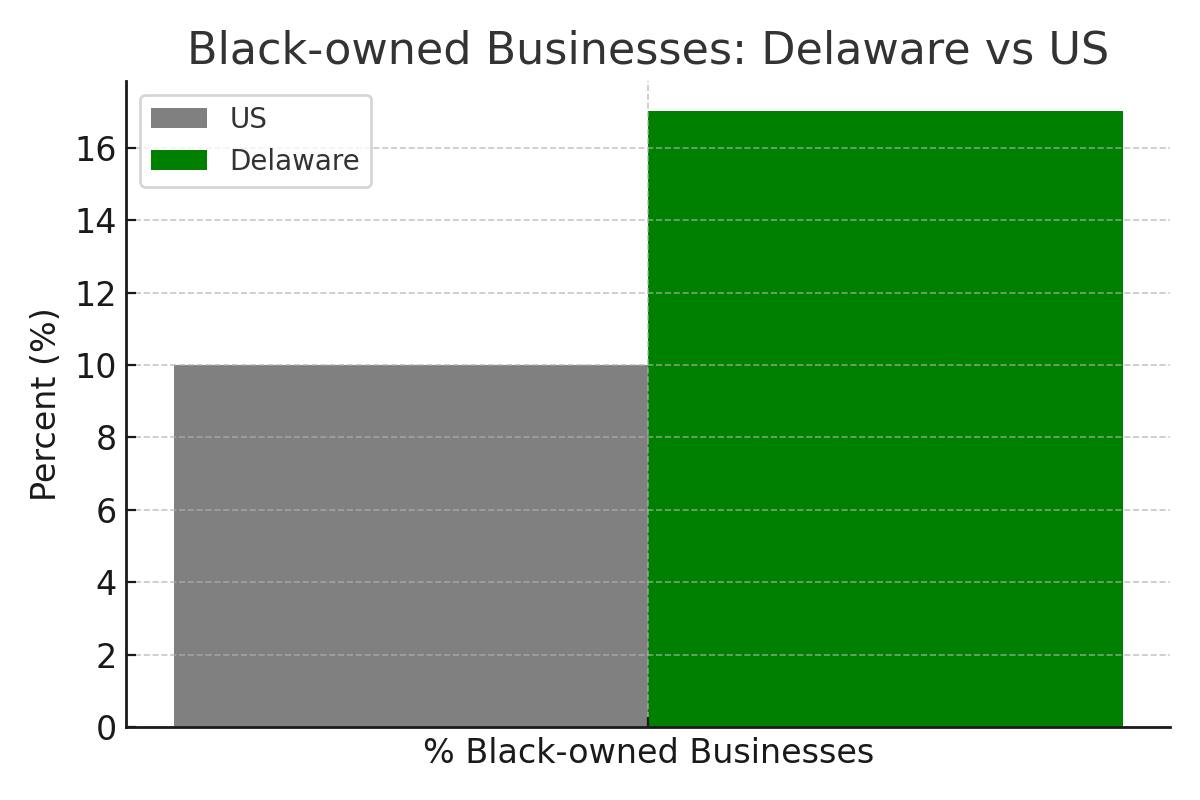
Delaware earned national headlines this fall when it was ranked #2 in the nation for Black-owned business growth and support. The study credited the state’s growing share of Black-owned firms and relatively strong survival rates, outpacing neighboring states.
Yet that success story comes with caution. Like their peers nationwide, many Delaware Black entrepreneurs still launch with less startup capital and face hurdles securing traditional bank loans or venture funding. Nationally, Black-owned firms comprise about 10% of businesses, but often start smaller and grow slower due to limited financing. Delaware’s share is closer to 17%, a notable gain but not yet a guarantee of lasting equity.
For Delaware to turn recognition into resilience, advocates point to targeted micro-grant programs, revolving loan funds backed by banks and credit unions, shared commercial kitchens and incubators in Wilmington, Dover, and Sussex County, and procurement goals that channel public spending to local Black-owned firms.
Chart: Delaware vs. U.S. percentage of Black-owned firms and 1-year growth.
Criminal-Justice Disparities
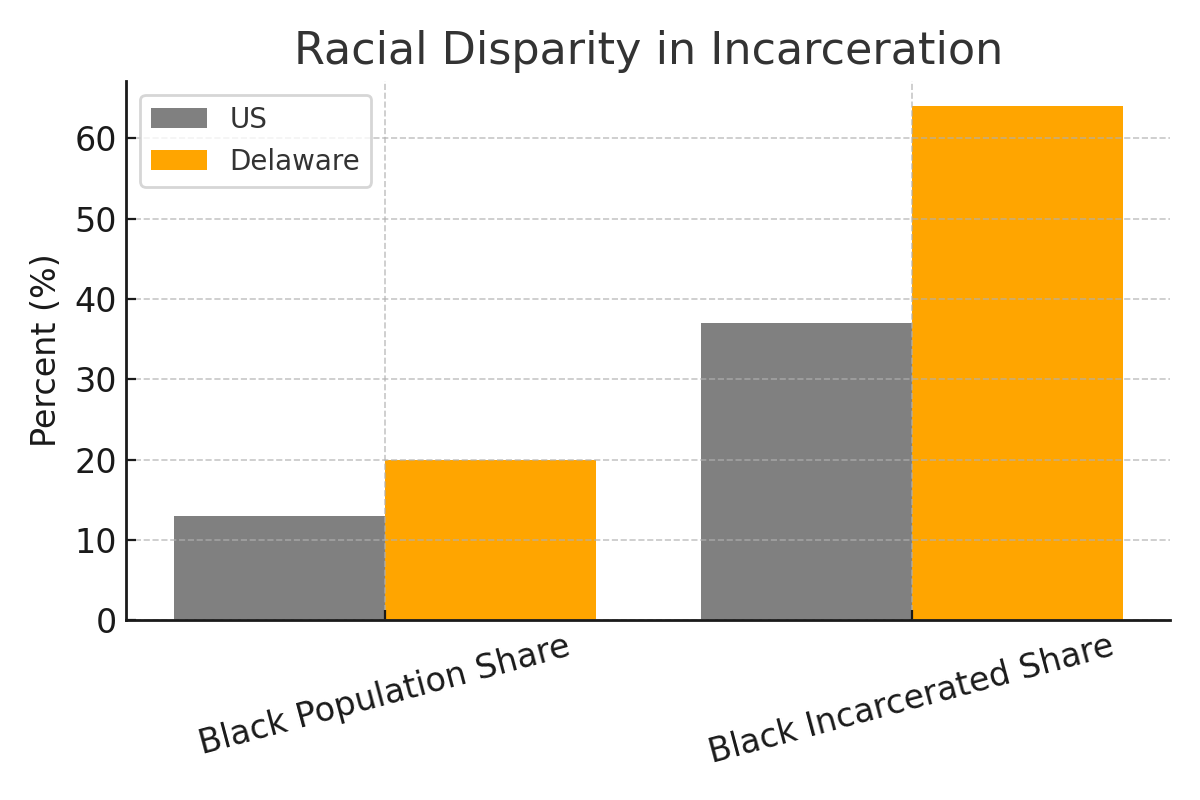
Despite making up about 20% of Delaware’s population, Black residents account for approximately 64% of the state’s prison population. This disparity is even sharper than the national picture, where Black Americans are about 13% of the population but roughly 37% of the incarcerated.
Local leaders and advocates call for expanding diversion and restorative-justice programs for lower-level offenses, re-examining sentencing for proportionality, and providing stronger re-entry supports, especially housing, employment pathways, and behavioral-health services. Transparent data dashboards on police stops, charging, and sentencing by race would help track progress and build trust.
Chart: Delaware vs. U.S. share of population vs. share of incarcerated people.
Health Inequities — Especially for Women and Children
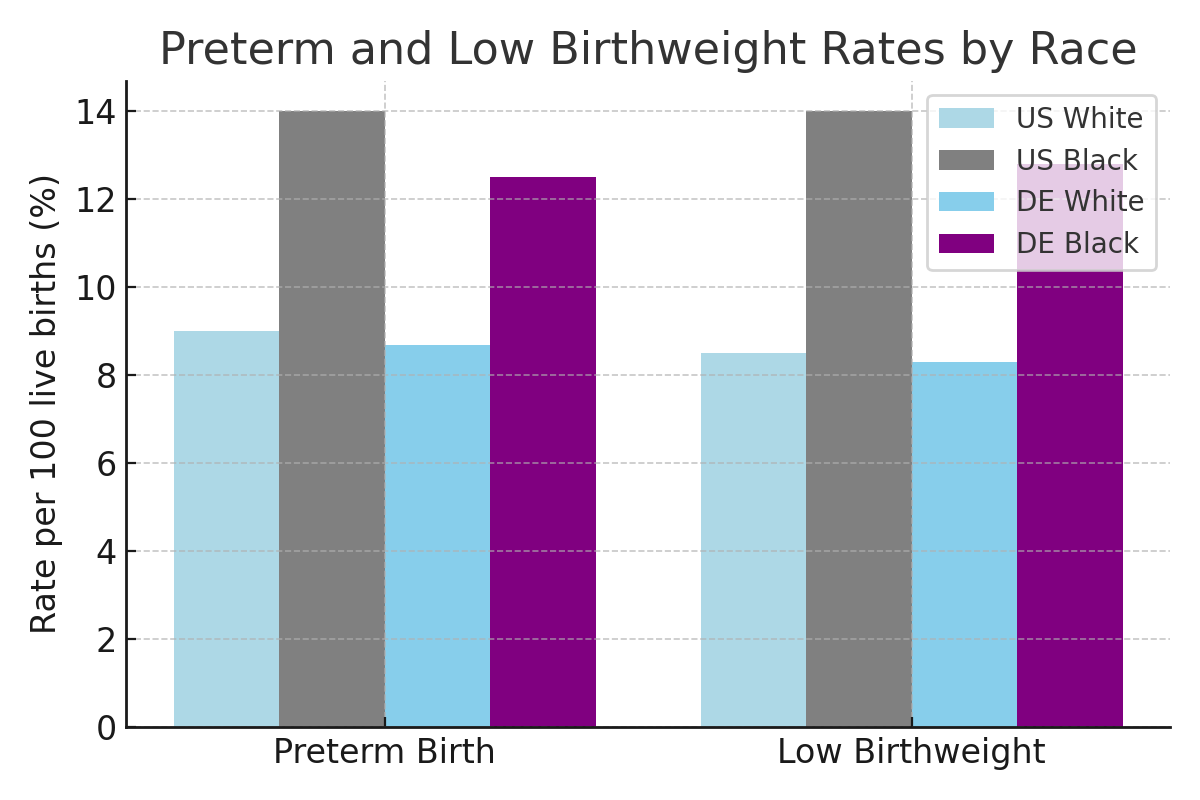
Health disparities remain a persistent challenge. Black women in Delaware face maternal-mortality rates roughly two times higher than white women, similar to national trends where the risk is two to three times higher. Black infants are also more likely to be born preterm or at low birthweight, with corresponding long-term health risks.
One 2024 Delaware snapshot found that 24.7% of Black children had two or more adverse childhood experiences (ACEs), far higher than some other demographic groups. These early stresses compound future health and social challenges.
Health advocates call for scaling up community-based doula programs, perinatal care navigators, and culturally competent primary-care services in underserved neighborhoods, as well as incentives for hospitals to close postpartum care gaps and strengthen chronic-disease management.
Chart: Delaware vs. U.S. preterm birth and low-birthweight rates by race.
Structural Barriers in Housing and Education
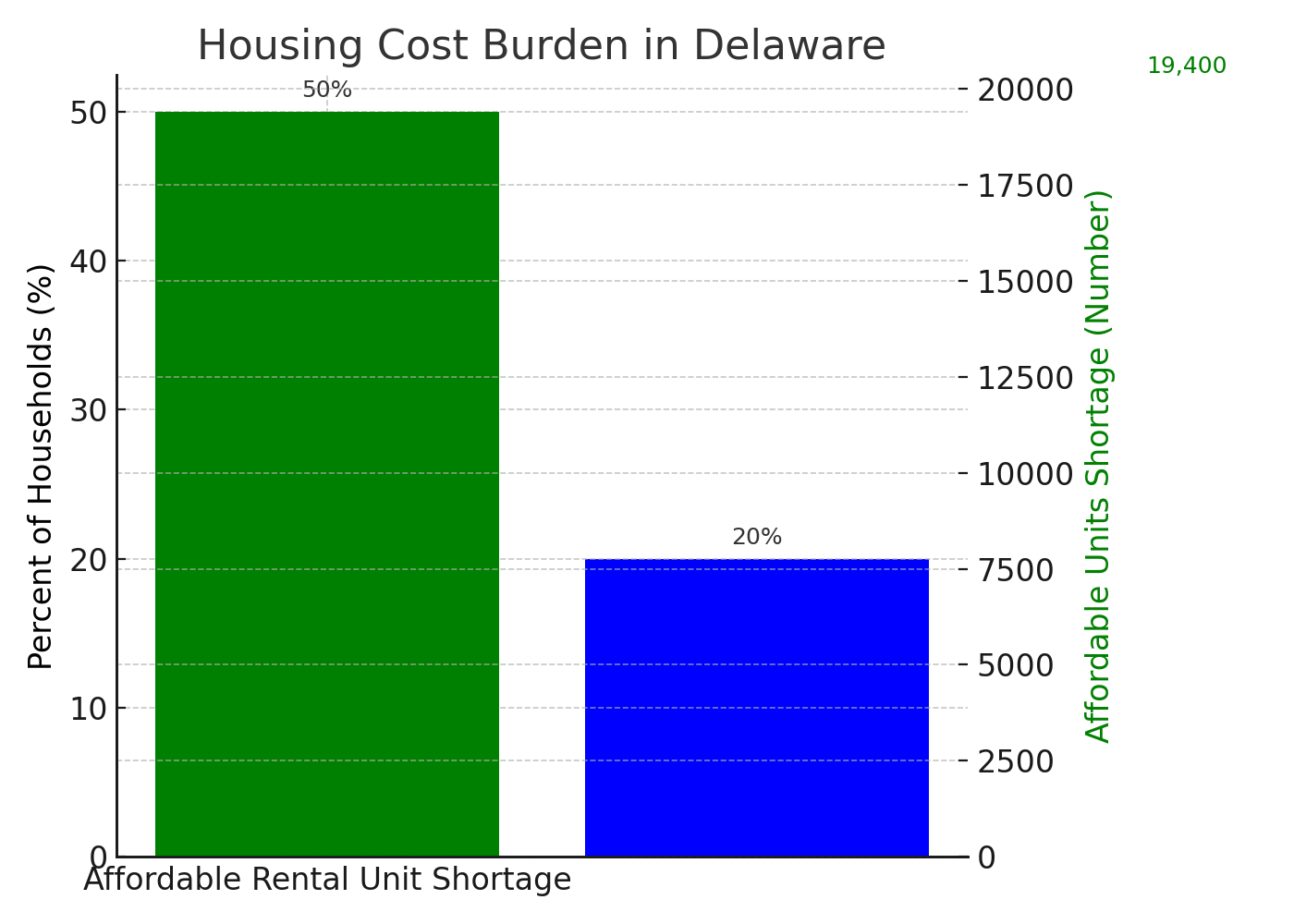
Delaware’s 2023 Housing Needs Assessment highlights a profound affordability crisis. About 50% of renter households, nearly 50,000 homes, spend more than 30% of their income on housing. Even one in five homeowners is similarly cost-burdened. The state currently faces a shortage of about 19,400 affordable rental units for households earning 50% or less of the area median income.
These burdens hit Black households particularly hard, contributing to a cycle of instability that undermines education, work, and health. Local experts emphasize the need for inclusionary zoning and density bonuses to create more below-market units, faster permitting for affordable-housing projects, and stronger rental-assistance programs. In education, targeted funding and tutoring for high-poverty districts and expanded career-technical programs could help narrow opportunity gaps.
Chart: Delaware’s affordable-housing unit shortfall and county-level rent-burden map.
Cultural Recognition and Public Memory
Progress is also being made in how Delaware acknowledges its Black history. On October 9, 2025, the state will unveil a historical marker honoring Brinkley Hill, a once-thriving free Black settlement north of Camden. The Brinkley brothers, William and Nathaniel, were noted conductors on the Underground Railroad, helping more than 100 enslaved people reach freedom. Brinkley Hill was also home to early Black institutions, including a schoolhouse and the Zion AME Church.
Public recognition efforts like this marker matter. They offer a fuller picture of Delaware’s past, honor the resilience and contributions of Black communities, and create new opportunities for heritage tourism. Advocates hope to see a statewide Black-history trail linking Brinkley Hill to other sites such as Rosedale Beach and historic churches and cemeteries.
Chart: Map of Delaware heritage sites for a potential Black-history trail.

Homelessness and Housing Instability
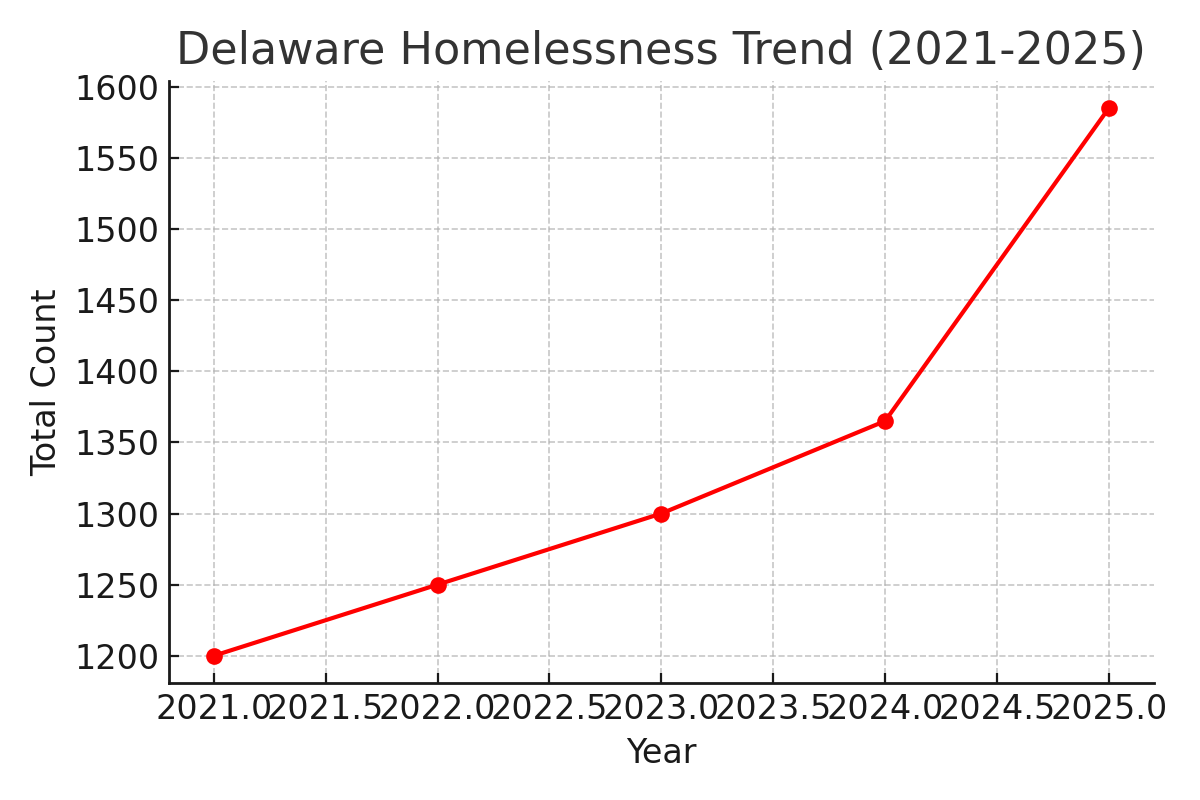
Homelessness has surged in Delaware. The 2025 Point-in-Time count recorded 1,585 people experiencing homelessness, up 16% from the previous year. Nearly one in five homeless households includes children, and minors represent more than one-quarter of the unhoused population. Black residents are disproportionately affected, making up about 60% of those experiencing homelessness.
This crisis reflects broader pressures, rising rents, stagnant wages, and limited affordable-housing supply. Advocates are urging the state to expand Housing-First programs that provide permanent supportive housing for chronically homeless individuals, invest in rapid re-housing and targeted rental assistance, and link these efforts with behavioral-health and workforce-re-entry supports.
Chart: Delaware’s homelessness trend line (2021-2025) and demographic breakdown.
Building a Unified Roadmap
These six challenges are intertwined. Housing instability aggravates health risks and complicates school and work attendance. Justice involvement disrupts careers and family stability. Under-capitalized businesses can’t anchor local jobs or wealth. Structural inequities and overlooked history both erode trust in institutions.
Delaware can lead by coordinating solutions across sectors:
-
Capital and Contracts: Expand micro-capital programs and set procurement goals for Black-owned firms.
-
Health and Home: Pair perinatal navigators and community health workers with housing-assistance and clinic outreach.
-
Justice and Jobs: Scale diversion and re-entry programs while linking returning citizens to apprenticeships and job pipelines.
-
Zoning and Supply: Pass inclusionary-housing policies and accelerate affordable-housing construction.
-
Memory and Markets: Turn heritage-site recognition, such as Brinkley Hill, into local tourism and spending that benefits Black businesses.
Moving Forward
This picture of Delaware’s Black community is one of resilience as well as challenge. The state’s high ranking for Black-owned businesses and new efforts to honor historic sites show progress. But structural gaps in justice, health, housing, and wealth remain.
Ongoing coverage will track which proposed solutions become policy and which communities see measurable gains. The stories and data presented here underscore that progress will depend on collective action, from policymakers, civic leaders, business owners, and neighbors, to dismantle old barriers and build a more equitable Delaware for all.